1516 Legacy Cir, Naperville, IL 60563




What Causes Dental Emergencies and How to Prevent Them


Dental emergencies do not occur at convenient times. A throbbing tooth in the middle of a hectic work day, a broken tooth at night when you are eating, or swelling that you wake up with can easily interfere with your schedule. In most instances, these scenarios are pressing because they involve pain, infection, or apparent damage, making it difficult to wait and see what will occur subsequently.
The most shocking fact that many people find surprising is that most dental emergencies do not just pop up. They often begin with tiny, seemingly manageable problems that have gone unnoticed or unaddressed. Knowing the causes of dental emergencies and how to prevent them can help you keep your oral health safe and avoid stress in the moment when something goes wrong.
What Constitutes a Dental Emergency?
A dental emergency is any oral health problem that requires urgent treatment to prevent pain, prevent infection, or safeguard your teeth and gums. A few are clear and obvious, whereas some begin with undertones and get worse as time passes.
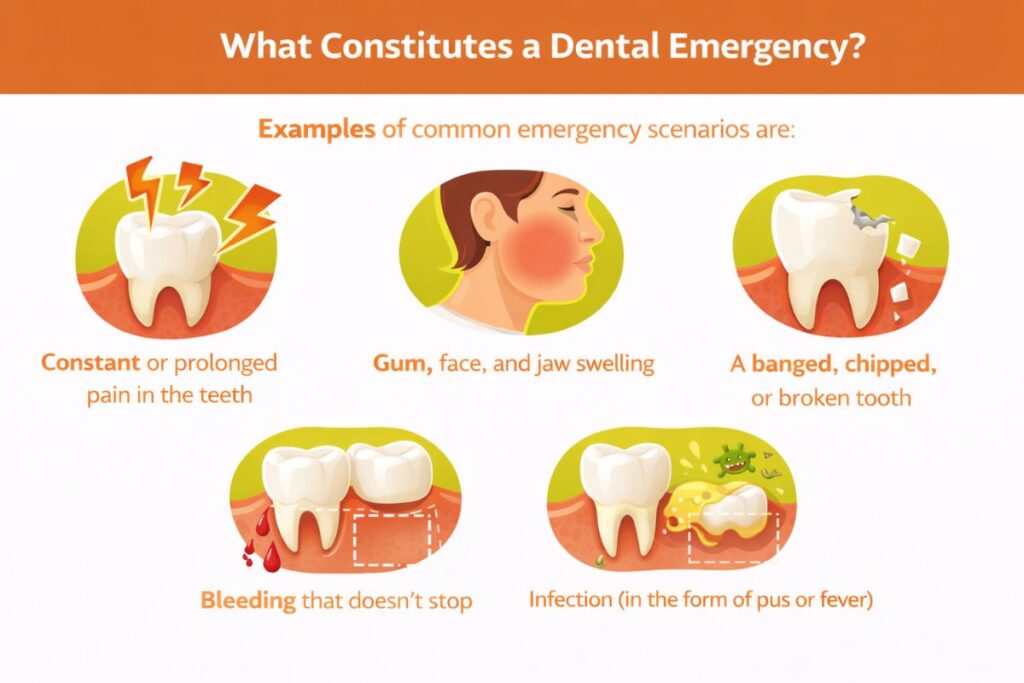
Examples of common emergency scenarios are:
- Constant or prolonged pain in the teeth
- Gum, face, and jaw swelling
- A banged, chipped, or broken tooth
- Bleeding that doesn’t stop
- Infection (in the form of pus or fever).
When this happens, the emergency dentist in Naperville usually handles the case, identifies the problem, and puts the situation back on its feet before it is harmed.
The Top Reasons for Dental Emergencies
Dental emergencies usually come out of the blue, yet in most instances, they arise out of the daily oral health problems that all go unnoticed or undiagnosed. Minor issues may develop silently and then reveal themselves as pain, swelling, or damage that may require urgent action.
Learning the most common reasons for dental emergencies will help you recognize the risks in a timely manner and respond appropriately. Implement measures to ensure minor issues are managed and do not escalate into urgent cases.
1. Untreated Tooth Decay
Unattended cavities are those that continue to worsen with time. The slight sensation can escalate into acute pain or swelling in the tooth. As the decay extends into the inner layers, emergency treatment is usually required to alleviate pain and prevent infection.
2. Periodontal Affliction and Periodontal Disease
Tender, swollen, or bleeding gums may indicate an infection beneath the surface. Left unattended, this may result in abscesses or bone loss. Gum diseases can move slowly and then rapidly result in severe pain or even swelling that will need immediate emergency care.
3. Dental Trauma
Sudden accidents account for most dental emergencies. Cracked or broken teeth may occur as a result of slips on icy sidewalks in winter, sports injuries, or biting something hard. Trauma does not necessarily cause pain immediately, but it may get even worse when left to deteriorate.
4. Old or Damaged Dental Work
Restorations, crowns, or fillings can weaken over time. When they break or dislodge, bacteria access the tooth. This usually causes pain or infection and sends the patient to an emergency dentist that residents of Naperville use for immediate attention.
5. Grinding Teeth and Clenching Jaws.
Stress-related habits, such as grinding or clenching, can erode enamel and affect the jaw. The pressure may cause fractures, nerve irritation, or jaw pain, which can lead to an emergency over time.
Early Warning Signs You Shouldn’t Ignore
Dental emergencies also usually provide early warning signs before they become serious problems. Listening to change can prompt you to act in time.
Watch for:
- Sensitivity of lingering nature following hot or cold foods.
- Pain when chewing
- Swollen gums or sore gums.
- An ugly taste that lingers on.
- Light pain that is recurring.
Ignorance of these signs may lead to minor problems becoming emergencies.
How to Prevent Dental Emergencies
The ability to prevent dental emergencies is often reduced to simple and routine activities and early learning. There are many pressing dental problems that can be prevented by responding to minor issues before they escalate and become painful or life-threatening. Being informed about how to care for your teeth, managing the risks that arise in your everyday life, and acting on the first signs are essential to maintaining your oral health and minimizing the risk of any unexpected deterioration of your teeth.
The Importance of Oral Hygiene
Plaque and bacteria that cause decay and infection are removed by brushing and flossing daily. Missing regular check-ups enables the accumulation of issues over time.
Address Problems Early
When something does not seem good, it is better to check it at the earliest opportunity. In most cases, early treatment can be used instead of having an emergency intervention.
Use Protection on Your Teeth at Work
Trauma can be prevented by wearing mouthguards during sports or other physical activities. Even simple recreational activities can be dangerous when teeth are not protected.
Be Mindful of What You Bite
Teeth can crack on hard foods such as ice, popcorn kernels, or hard candy. Caring about what you chew would lower the chances of having a breakthrough.
Cope with Stress-Related Habits
The tension in the jaw and grinding tend to be more active during stressful times. A night guard will help relieve pressure on the teeth and prevent fractures.
Why Timing Matters in Dental Emergencies
Delayed care may allow the transmission of infection or cause damage. What begins as local pain may extend to the surrounding teeth, bone, or tissue. Emergency treatment aims to prevent the development of complications, eliminate symptoms, and stabilize oral health until complications arise.
In most cases, an emergency dentist assesses the problem, manages pain or infection, and decides on the best steps to take next to provide long-term care with the highest safety.
Taking the Right Steps When It Matters Most
Dental emergencies are stressful for patients, and when pain or swelling disrupts their normal lives, this can be especially stressful. Understanding the typical causes and how to prevent them can put you in a better position to defend your oral health. Even minor but active steps can lead to significant changes in the long term.
In case of an urgent dental problem, Living Well Dental Group offers emergency care aimed at recovery and stabilization. An early evaluation may be conducted to prevent complications and maintain a healthier, more comfortable smile in the future.
Questions People Ask About Dental Emergencies
1. What should I do if tooth pain starts suddenly?
Rinse your mouth with warm water and avoid chewing on that side. Persistent pain often signals infection or nerve irritation and should be evaluated promptly before it worsens.
2. Can a small chip in a tooth become an emergency?
Yes. Even minor chips can expose inner layers of the tooth, allowing bacteria to enter. Over time, this may lead to pain or infection requiring urgent care.
3. Is gum swelling always an emergency?
Not always, but swelling paired with pain, fever, or drainage can indicate infection. These symptoms should be addressed quickly to prevent complications.
4. What happens during an emergency dental visit?
The focus is on identifying the cause, relieving discomfort, and stabilizing the problem. Treatment depends on the issue but aims to prevent further damage.
5. Can stress really lead to dental emergencies?
Yes. Clenching and grinding place constant pressure on teeth and jaws, increasing the risk of fractures, soreness, and inflammation that may require urgent attention.
6. How can I lower my risk of needing emergency care?
Consistent oral hygiene, early attention to symptoms, protective gear during activities, and stress management all help reduce the chance of dental emergencies.