1516 Legacy Cir, Naperville, IL 60563




Top Mistakes People Make During a Dental Emergency


A dental emergency can occur at any time without prior warning. With this, people are usually unsure of what to do and what not to do in any such case. It may be a broken tooth, a toothache, a knocked-out tooth, etc., and doing the right thing can greatly impact one’s health. In most cases, people may panic and do the wrong thing out of sheer nervousness and confusion.
In this blog post, we’ll discuss some of the most common mistakes people make in the event of a dental emergency and provide you with valuable suggestions on how to deal with it properly. If you want to get the best possible service in the hands of a professional dentist in Naperville, it’s always important to know how to avoid making common mistakes in the event of a dental emergency.
Common Mistakes and How to Avoid Them
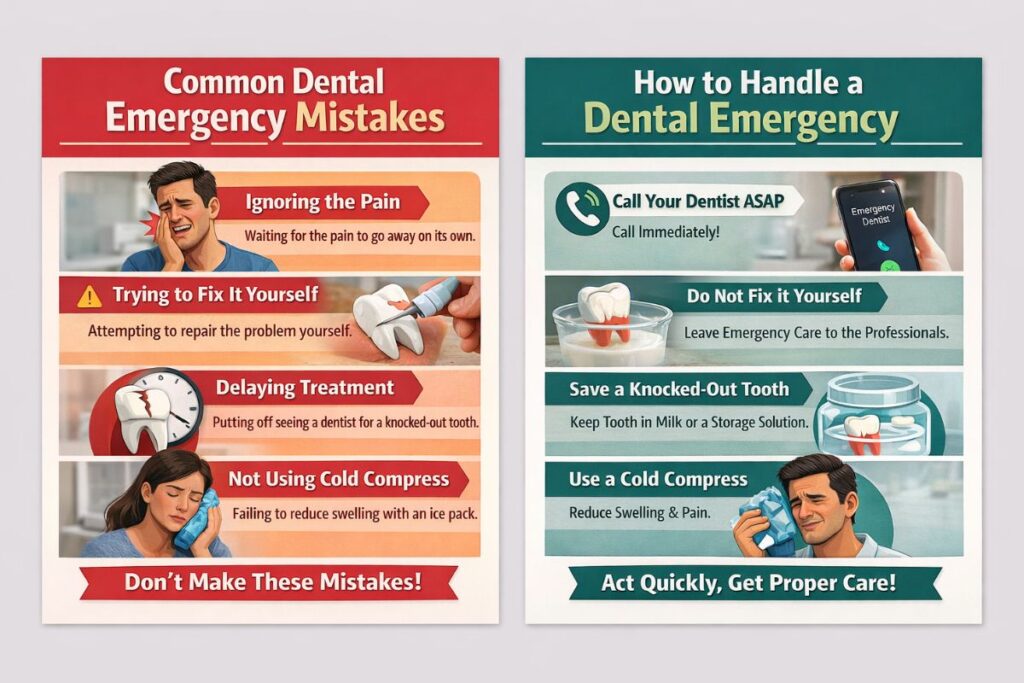
While dental emergencies can be very stressful, knowing what not to do can make a huge difference. In the following sections, we will explore the most common mistakes people make during a dental emergency.
Mistake #1: Ignoring the Pain
One of the most common errors individuals make in emergency dental situations is ignoring the pain. While it may be tempting to simply wait for the pain to go away on its own, complications may arise. Pain, such as toothaches, swollen gums, or discomfort, may be an early sign of an underlying condition that requires immediate attention.
What to Do Instead:
If you feel pain, especially after an injury or if it feels severe, it’s important to contact an emergency dentist in Naperville as soon as possible. Do not expect the pain to heal on its own, as it may worsen or cause further damage.
Mistake #2: Trying to Fix It Yourself
During a dental emergency, many people, out of panic, have chosen to handle the situation themselves. This includes, but is not limited to, attempting to fix a broken tooth.
What to Do Instead:
It is imperative that you avoid trying to resolve the problem on your own. If you have a toothache caused by a loose filling or a tooth that has been broken, for instance, do not attempt to glue the filling or tooth together. Instead, keep the tooth clean and contact your emergency dentist to have the problem fixed correctly.
Mistake #3: Delaying Treatment for a Knocked-Out Tooth
A knocked-out tooth is an emergency, and failure to treat it promptly may result in permanent loss of that tooth. People tend to delay addressing their dental issues, not realizing they are running out of time when they feel an emergency, such as a knocked-out tooth. However, to be reimplanted, a tooth must be reimplanted within a specific time frame to prevent permanent loss.
What to Do Instead:
If a tooth has been knocked out, pick it up by the crown, not the root, and gently rinse it with water. You should then attempt to put the tooth back in its socket, but if you are unable to do so, keep the tooth in a container of milk or a tooth-preservation solution. You should contact an emergency dentist in Naperville immediately, as the sooner you receive treatment, the better your chances of saving the tooth.
Mistake #4: Not Using Cold Compresses for Swelling
Swelling is a general response that results from dental injury, an abscess formation, or getting hit in the face. Most people do not treat swelling promptly, causing them much pain and discomfort.
What to Do Instead:
You should place a cold compress on the affected area to reduce swelling and numb the pain. It is essential that you wrap the ice in a cloth before placing it on the affected area to avoid direct skin-to-ice contact. This treatment, however, is not a cure for your problem, but it is essential for managing symptoms until you see your emergency dentist.
Mistake #5: Not Keeping the Area Clean
Whether you have a dental injury or an infection, you need to clean the area properly. However, in a hurry or in a state of panic, most people fail to properly rinse their mouths and clean the area, which can lead to infection. What to Do Instead: If you have any dental injury, rinse your mouth with warm water to keep the area clean. Mouthwash containing alcohol may cause problems with dental injuries; therefore, it is advisable not to use it for cleaning in such cases. However, if unsure of what to do, seek advice from your emergency dentist.
Mistake #6: Avoiding the Dentist Due to Anxiety
Dental anxiety is a common phenomenon, and this anxiety sometimes results in dangerous consequences when a dental emergency occurs. Patients suffering from dental anxiety often ignore their condition, hoping that it will improve on its own, instead of seeking medical attention from a dentist.
What to Do Instead:
If you are anxious about visiting the emergency dentist, it is always best to talk to the office staff before going. Emergency dental offices, such as Living Well Dental Group, offer ways to minimize anxiety during and after the visit. However, it is best to keep in mind that correcting the problem soon will reduce anxiety in the long run.
Act Quickly and Correctly in Dental Emergency Situations
When you have a dental emergency, it is very important to respond promptly and avoid common pitfalls that could make the problem worse. By staying calm, seeking professional medical care, and following the right course of action, you can control the problem and achieve the most desirable outcomes.
If you have a dental emergency, seek immediate care by calling. Living Well Dental Group is here to help you in Naperville. If you are having a dental emergency, we are available to help you right away. Contact us today.
Questions People Ask About Dental Emergency
1. What should I do if I knock out a tooth?
If a tooth is knocked out, handle it by the crown, rinse it gently, and place it in milk or a tooth preservation solution. Contact an emergency dentist immediately for the best chance of saving the tooth.
2. How can I manage pain before I see the dentist?
For pain management, take over-the-counter pain relief, apply a cold compress to reduce swelling, and avoid hot or cold foods that may aggravate the pain. Call your dentist as soon as possible for further care.
3. Is it safe to use ice directly on a dental injury?
No, never apply ice directly to the skin. Always wrap the ice in a cloth or towel to prevent skin damage. A cold compress can help reduce swelling and numb the area temporarily.
4. What is the most common dental emergency?
The most common dental emergencies include severe toothaches, cracked or broken teeth, knocked-out teeth, and abscesses. Each of these requires immediate care to prevent further damage and alleviate pain.
5. How long can I wait to see an emergency dentist?
Dental emergencies should be treated as soon as possible. For issues like knocked-out teeth, time is critical, and treatment should occur within an hour. Delaying treatment increases the risk of permanent damage.
6. Can dental anxiety prevent me from getting the right care?
Dental anxiety is common, but it shouldn’t prevent you from seeking care during an emergency. Many dental offices offer sedation options to help patients feel more at ease during treatment.