1516 Legacy Cir, Naperville, IL 60563




Invisalign vs Braces in Lisle, IL

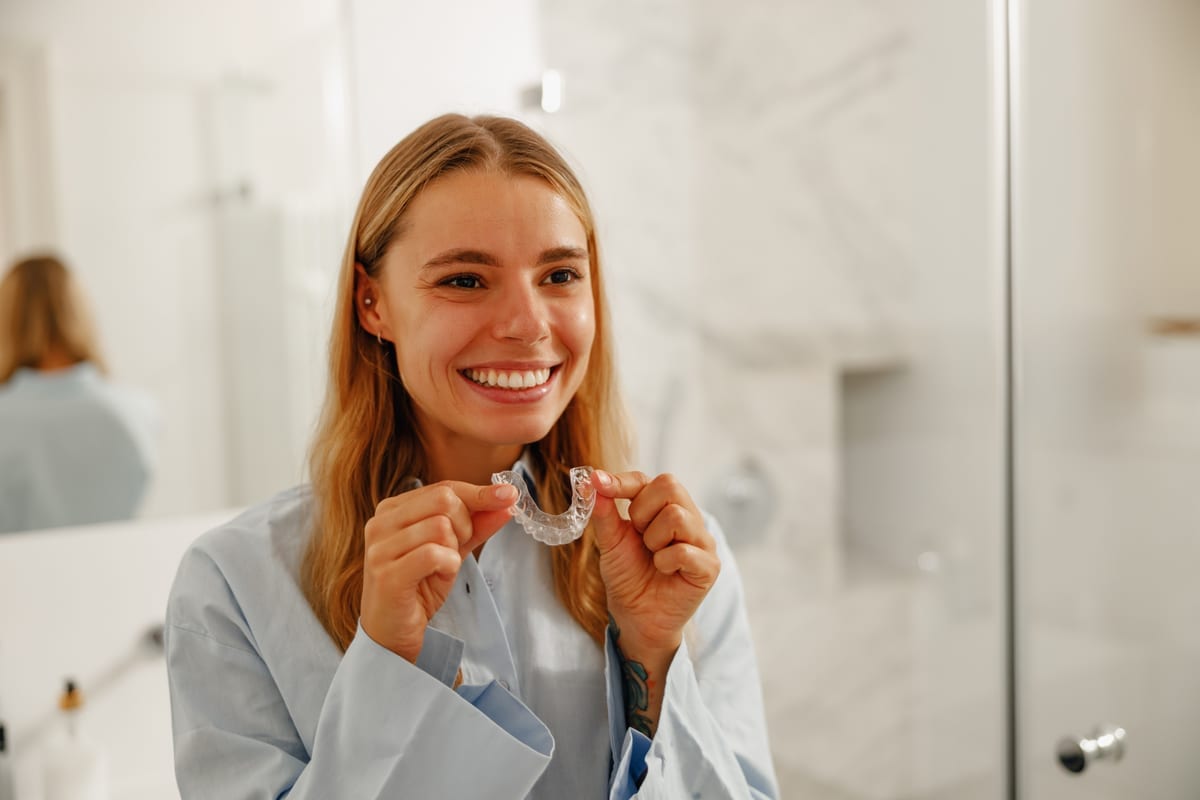
If you live in Lisle and have been wondering, is Invisalign right for you, or do braces win instead? — you are not alone. Many patients ask this exact question every day. Invisalign has become incredibly popular, and for good reason. But it is not the perfect solution for every smile, and understanding your options leads to better outcomes.
At Dentist Naperville – Living Well Dental Group, Dr. Keven Wells helps patients from Lisle and surrounding communities find the right orthodontic path. This guide breaks down what Invisalign can fix, where it falls short, and when traditional braces are the smarter choice.
What Invisalign Can Fix: Common Candidacy Wins
Invisalign works by using a series of clear, removable aligners. Each set gently shifts your teeth toward the desired position. The treatment is discreet, comfortable, and fits easily into adult and teen lifestyles.
Invisalign tends to perform very well for mild to moderate orthodontic issues. Here are the conditions it handles effectively:
- Mild to moderate crowding — teeth that overlap slightly or feel cramped
- Spacing issues — small gaps between teeth that affect appearance or bite
- Mild overbite — when upper teeth extend too far over the lower teeth
- Mild underbite — when lower teeth sit in front of upper teeth by a small margin
- Crossbite — when upper and lower teeth do not align correctly side to side
- Open bite — when front teeth do not make contact when biting down
For these cases, Invisalign can produce excellent results. Patients in Lisle who maintain consistent wear — 20 to 22 hours per day — typically see great outcomes.
When Braces Win Instead: Cases Invisalign Cannot Handle
Invisalign is remarkable technology, but it has real limitations. Some dental and jaw alignment issues require more precise, continuous force. Traditional braces stay fixed to your teeth around the clock, giving orthodontists more control over complex movements.
So when do braces win instead of Invisalign in Lisle? Consider these situations:
- Severe crowding — teeth significantly rotated or stacked require stronger correction
- Large overbites or underbites — significant jaw discrepancies need more mechanical force
- Tooth intrusion and extrusion — moving teeth vertically is harder with aligners alone
- Compliance concerns — patients who may forget to wear aligners need fixed appliances
- Complex bite corrections — cases involving multiple bite planes and tooth movements
- Younger patients — children with still-developing jaws often need the precision braces provide
Dr. Keven Wells thoroughly evaluates every patient before recommending a treatment path. The goal is always the most effective solution, not the most popular one.
How Candidacy Is Determined at Our Lisle-Area Practice
Determining whether Invisalign is right for you starts with a comprehensive examination. Dr. Wells reviews your dental and medical history in detail. He then takes X-rays, 3D scans, or digital impressions to assess your bite and bone structure fully.
This process is similar to what happens during a Preventive Dentistry exam — we look at your whole oral health picture, not just aesthetics. Existing issues like gum disease, cavities, or worn teeth must be addressed before any orthodontic treatment begins.
Some patients also have structural concerns that require restorative work first. For example, a chipped tooth may need a Dental Crowns restoration before aligners can fit properly. Taking these steps ensures your orthodontic results are stable and long-lasting.
After gathering all this information, Dr. Wells discusses your options honestly. He explains what Invisalign can and cannot achieve in your specific case. That conversation empowers you to make a confident, informed decision.
Invisalign vs. Braces: Key Differences to Consider
Both treatments move teeth effectively. But they differ in important ways that affect daily life and final results. Here is a simple comparison to help Lisle patients think through the decision:
Invisalign advantages:
- Removable for eating, drinking, and brushing
- Nearly invisible in appearance
- Fewer emergency visits for broken wires or brackets
- Often more comfortable for soft tissue
Traditional braces advantages:
- Fixed to teeth — no forgetting to wear them
- Better for complex rotations and severe bite issues
- Can handle more vertical tooth movements
- May achieve faster results in severe cases
Neither option is universally better. The right choice depends entirely on your unique dental structure and lifestyle. Dr. Wells helps you weigh these factors with clarity and zero pressure.
What Lisle Patients Should Expect During Treatment
If you qualify for Invisalign, you will receive a series of custom aligners. You switch to a new set roughly every one to two weeks. Check-in appointments happen every six to eight weeks to monitor progress.
If braces are the better option, brackets are bonded to each tooth and connected by a wire. Dr. Wells or an orthodontic specialist adjusts the wire periodically. Both treatments typically take anywhere from 12 to 36 months, depending on complexity.
After completing either treatment, a retainer is essential. Retainers prevent teeth from shifting back toward their original positions. Skipping retainer wear is one of the most common reasons patients lose their results over time.
Your Next Step: Get a Personalized Evaluation in Lisle
The best way to answer the question — is Invisalign right for you, or do braces win instead in Lisle — is to get a professional assessment. Online quizzes and social media posts cannot replace an in-person clinical evaluation. Only a dentist who has examined your bite, your bone structure, and your goals can give you a real answer.
Dr. Keven Wells and the team at Living Well Dental Group are committed to honest, patient-centered care. We serve patients from Lisle, Naperville, and the surrounding communities. We take the time to explain every option so you feel confident and informed before you commit to any treatment.
Your smile is worth getting right the first time. Book Now to schedule your appointment with our team.
Frequently Asked Questions
Is Invisalign right for adults, or is it mainly for teens?
Invisalign works well for both adults and teens. Adults often prefer it because it is discreet and removable. Teens can use it too, though compliance — wearing aligners consistently — is especially important for younger patients. Dr. Wells evaluates each person individually to determine the best fit.
How do I know if my bite is too complex for Invisalign?
An in-person evaluation is the only reliable way to know. Dr. Wells uses digital scans and X-rays to assess the severity of crowding, spacing, and bite issues. Severe rotations, large overbites, or significant jaw discrepancies often point toward traditional braces as the better option.
Can I switch from Invisalign to braces if my treatment is not working?
Yes, it is possible to transition from Invisalign to braces if your case requires it. This is another reason a thorough initial evaluation matters so much. Choosing the right treatment from the start saves you time, cost, and frustration in the long run.
Does Invisalign cost more than traditional braces?
The cost of Invisalign and braces varies based on case complexity and treatment length. In many situations, the costs are comparable. Dr. Wells provides transparent cost information during your consultation so you can plan accordingly.
How long does an Invisalign consultation take at Living Well Dental Group?
A typical Invisalign consultation takes about 45 to 60 minutes. Dr. Wells reviews your dental history, takes necessary scans or X-rays, and discusses your goals in detail. By the end of your visit, you will have a clear picture of which treatment is right for your smile.